Synthetic Data for AI Testing in 2026: A Practical Privacy and Quality Guide
Synthetic data can help teams test apps and AI systems without putting raw customer records into every development tool. Yet it can also hide errors or leak sensitive patterns. This guide shows how to define a useful test, review privacy risk, and keep the output under control.
What a test record can show
A booking app needs sample names, dates and prices to check its forms. A test set can use made-up people and trips. Yet fake data still needs real rules: an end date must follow a start date, and totals must add up. Also check that no real person appears by chance. Good synthetic data should help find bugs without spreading private records to every test tool.
Why teams make synthetic data
Synthetic data is information created to resemble useful patterns without simply copying a real record. Teams use it to test software, train models, and share examples when real data is scarce or sensitive. It can help a developer test a payment workflow without using a live customer’s account. It can also help a team explore rare failure cases.
A practical example
But synthetic does not mean private by default. A generator can memorize or reveal parts of its source data. A sample can be unrealistic and produce false confidence. The right question is not whether the data is synthetic. It is whether it is fit for a specific purpose and has been tested for privacy and accuracy.
Pick a use case before a generator
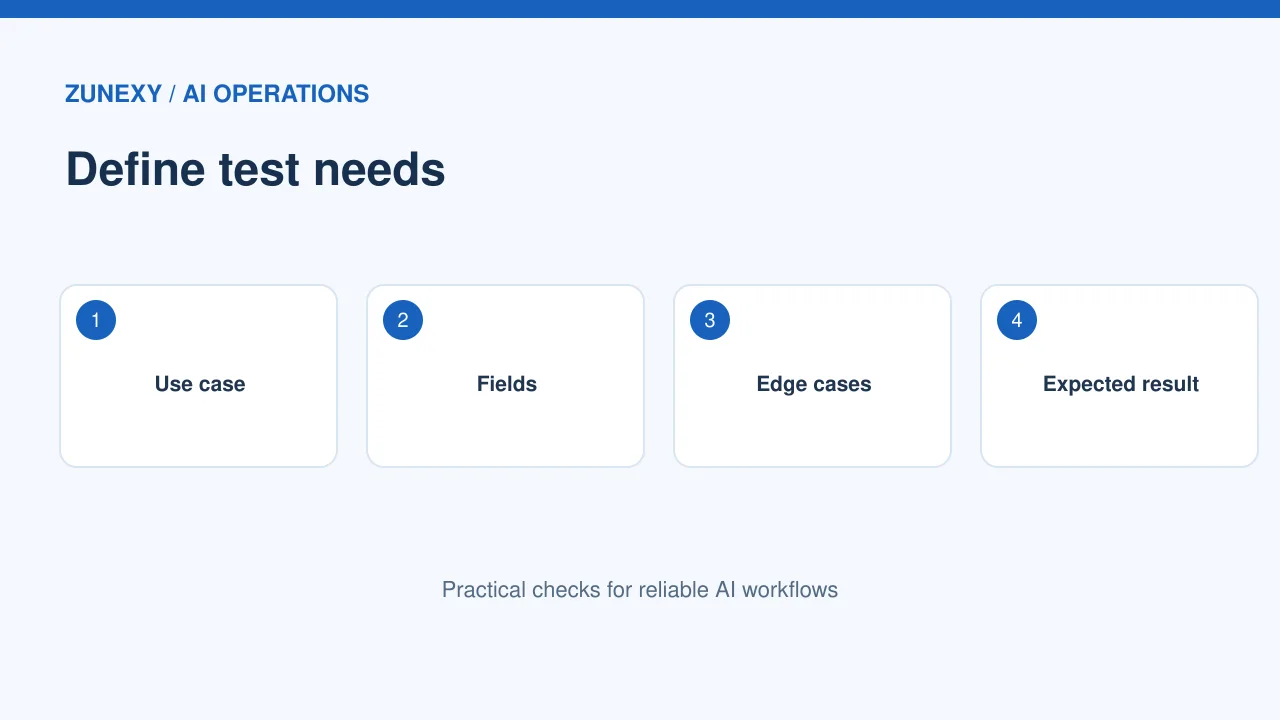
Write down what you want to test. It might be a form that rejects invalid dates, a fraud model that needs rare cases, or a reporting view that must handle large datasets. Each job needs different traits. A made-up table with random names may be enough for interface testing and useless for statistical modeling.
What to check
For a booking platform, a test set should include cancellations, overlapping dates, multiple currencies, and partial refunds. It does not need to carry real guest identities. The test owner should define the expected behavior before asking a tool to create thousands of rows.
Separate fully artificial from derived data
Some test data is invented from rules. Other data is generated by a model trained on real records. The privacy risk differs. A data generator that sees sensitive patient or payroll records may reproduce unusual combinations that identify people.
A practical example
The UK Information Commissioner’s Office warns that synthetic data can still carry re-identification risk. It also notes a trade-off: changing data enough to protect people can reduce its value for machine learning. Use that caution in any jurisdiction, then get local legal advice where needed.
Describe the shape of useful data
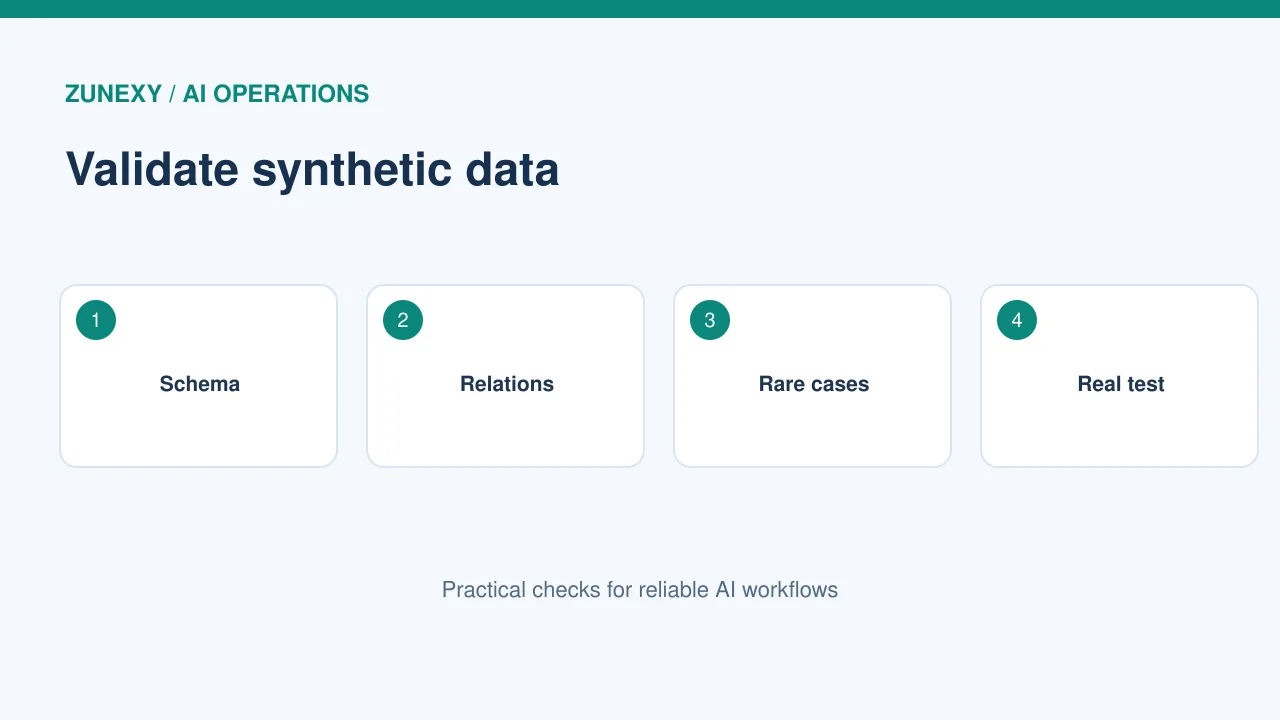
Before generation, document fields, valid ranges, relationships, missing-value patterns, and the volume you need. Ask which patterns are essential. A customer order dataset might need a link between orders, items, payments, and refunds. If the generator breaks those links, a realistic-looking file will still fail the test.
What to check
Create a small seed specification. Include normal records, boundary values, and known bad inputs. Add clear examples of what should be accepted and rejected. This makes the generation process easier to review and repeat.
Test utility against real tasks
A data set is useful when it supports the task it was made for. For a UI, check display, sorting, filters, and error messages. For an AI model, compare performance on an independent real-world test set that the generator did not see. Do not judge utility only by similar averages or charts.
A practical example
Suppose a synthetic loan dataset matches the average loan size but misses rare fraud patterns. A fraud model trained on it may look accurate in a synthetic test and fail in production. The quality review should include the cases that carry real cost.
Check for copied records
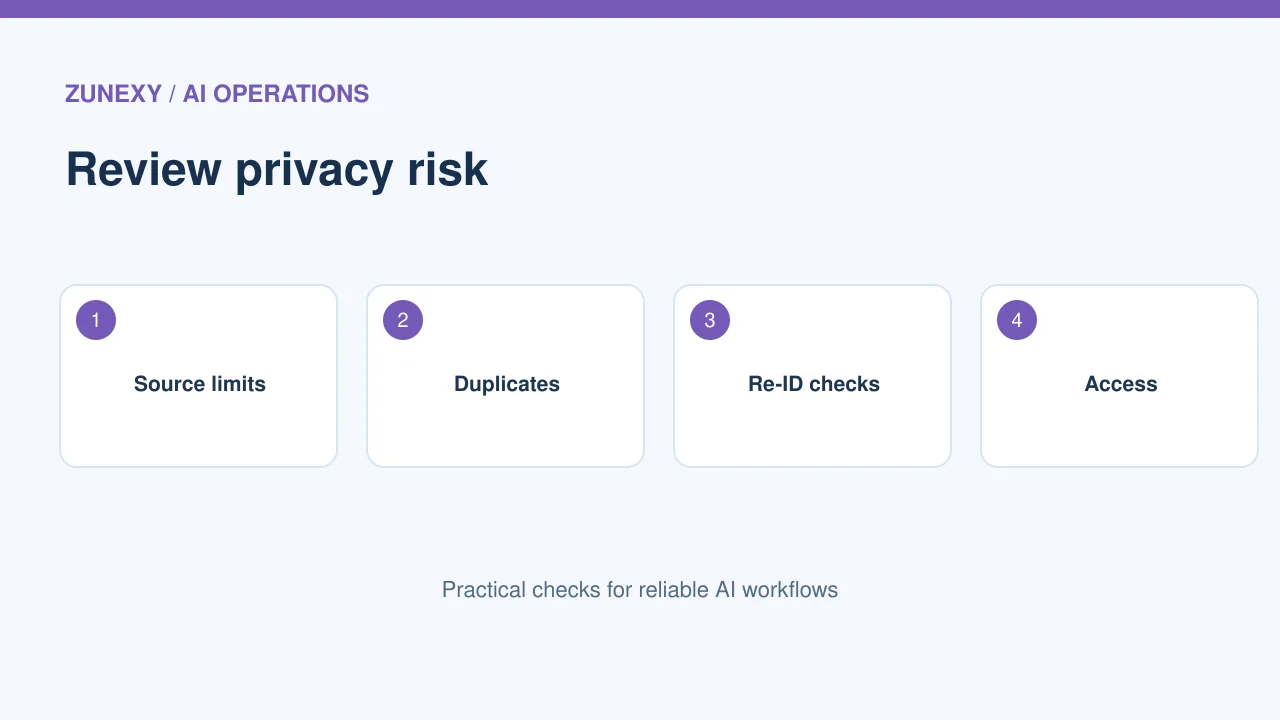
Look for exact matches, near duplicates, and unusual field combinations from the source. A generator that outputs a rare real record with minor changes can create risk. Privacy testing may include membership inference or other attack simulations, depending on the sensitivity and method.
What to check
If a team uses internal HR data, it should not release sample rows just because names were replaced. Job title, office, age, and salary together can still point to one person. Limit source access, test outputs, and treat the resulting files as sensitive until the review is complete.
Avoid false claims of anonymity
Synthetic, de-identified, anonymous, and encrypted are different claims. Do not use them as synonyms in a product description or data-sharing agreement. A privacy team should decide what label fits the method and the realistic risk.
A practical example
A training set can have no direct names yet reveal a small group through rare combinations. A new use or a new dataset may change that risk. Record the intended users and allowed purpose instead of declaring the file safe forever.
Document generation and versioning
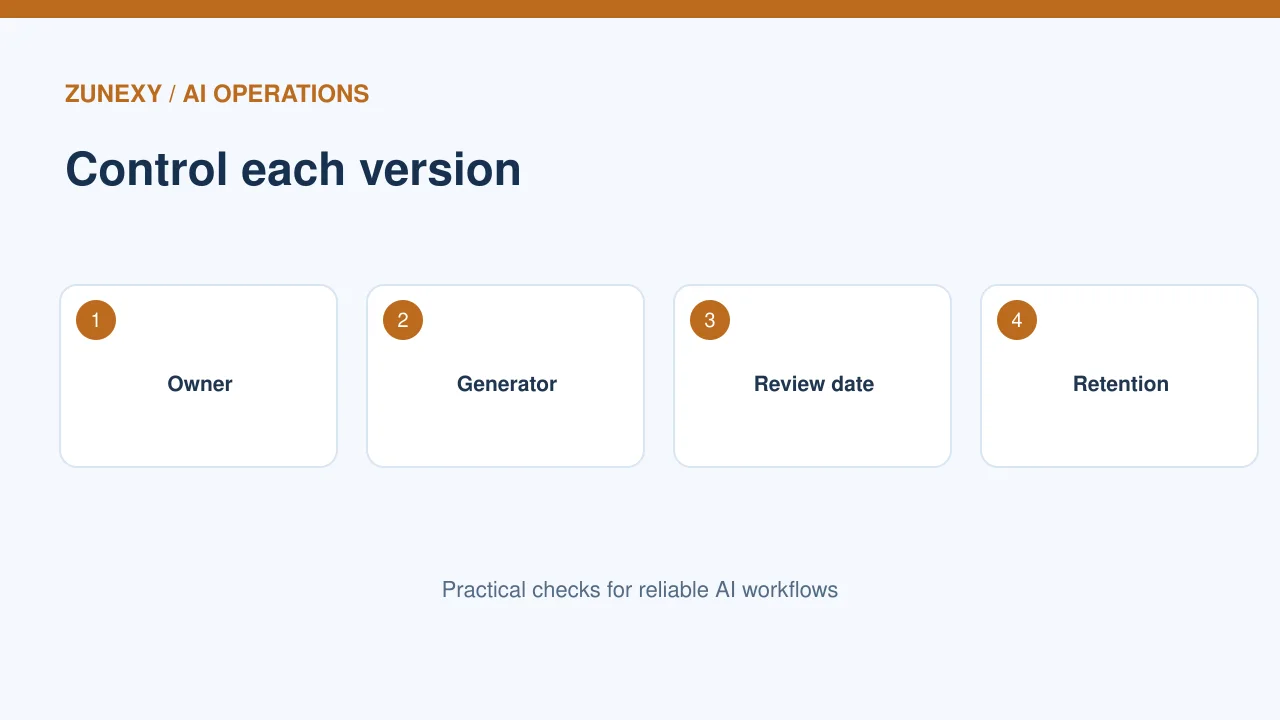
Keep the generator version, configuration, random seed where applicable, source approval, output checks, and date. This helps another team reproduce a test and understand why results changed. Do not store the original private data in a public code repository along with the script.
What to check
For a software release, link the synthetic dataset version to the test run. If a future release breaks, the team can compare the same cases. That is more useful than generating a fresh random sample every time and hoping it catches the same issue.
Build a human review step
Automated checks can find broken schema rules or obvious duplicates. People can spot cases that look plausible but make no sense for the business. Involve domain staff who know what a valid record looks like. Their review should focus on the use case, not whether the data seems impressive.
A practical example
A retail analyst might notice that synthetic orders show refunds before purchases or impossible delivery times. A developer might miss that because the fields parse correctly. Record the issue and update the generator so the next set improves.
Control sharing and retention
Synthetic files should have a named owner, a purpose, and a retention period. If they were derived from sensitive data, do not assume they can be shared freely. Check contractual restrictions and the privacy assessment first.
What to check
Use role-based access and audit logs for high-risk datasets. Remove old samples when they are no longer needed. A temporary test file can become an unmanaged data source if it is copied into notebooks, chat messages, and shared drives.
A small pilot in four weeks
In week one, select one low-risk task and write the data rules. In week two, make a small sample and test schema and relationships. In week three, check utility and privacy risks. In week four, document the limits and decide whether to expand.
A practical example
This schedule is an example, not an official standard. The NIST AI Risk Management Framework offers a broader way to manage AI risks. Use its map, measure, manage, and govern ideas to assign owners and review impacts rather than treating synthetic data as a one-click privacy fix.
Before sharing a dataset
- Confirm the use case and source permission.
- Check valid ranges and field relationships.
- Test for copied or identifying records.
- Measure usefulness on an independent task.
- Record owner, version, access and retention.
When to choose a different method
Sometimes you do not need synthetic data at all. Hand-made test cases can be enough for a form or an API. Aggregated statistics may answer a planning question without row-level records. A secure test room may be a better place for a high-risk model. Compare these options before you build a data generator. Pick the simplest method that can answer your question safely.
The useful takeaway
Good synthetic data is not merely realistic-looking. It helps a known task, respects the people behind any source data, and has clear limits. Start small and test both utility and privacy before wider use.