Confidential Computing for AI Workloads in 2026: A Practical Pilot Guide
AI teams often encrypt data in storage and over the network. But what happens while a model or application uses it? Confidential computing aims to reduce exposure during that step. Here is how a small team can decide whether it helps and test it safely.
Why a protected compute space may help
Picture two teams that want to study a shared set of records. They do not want a cloud host or the other team to read the raw files. A protected compute setup may cut some of that risk while the task runs. But it still needs strong keys, trusted code and a test of the setup. The hardware feature alone cannot make unsafe data use safe.
What confidential computing actually protects
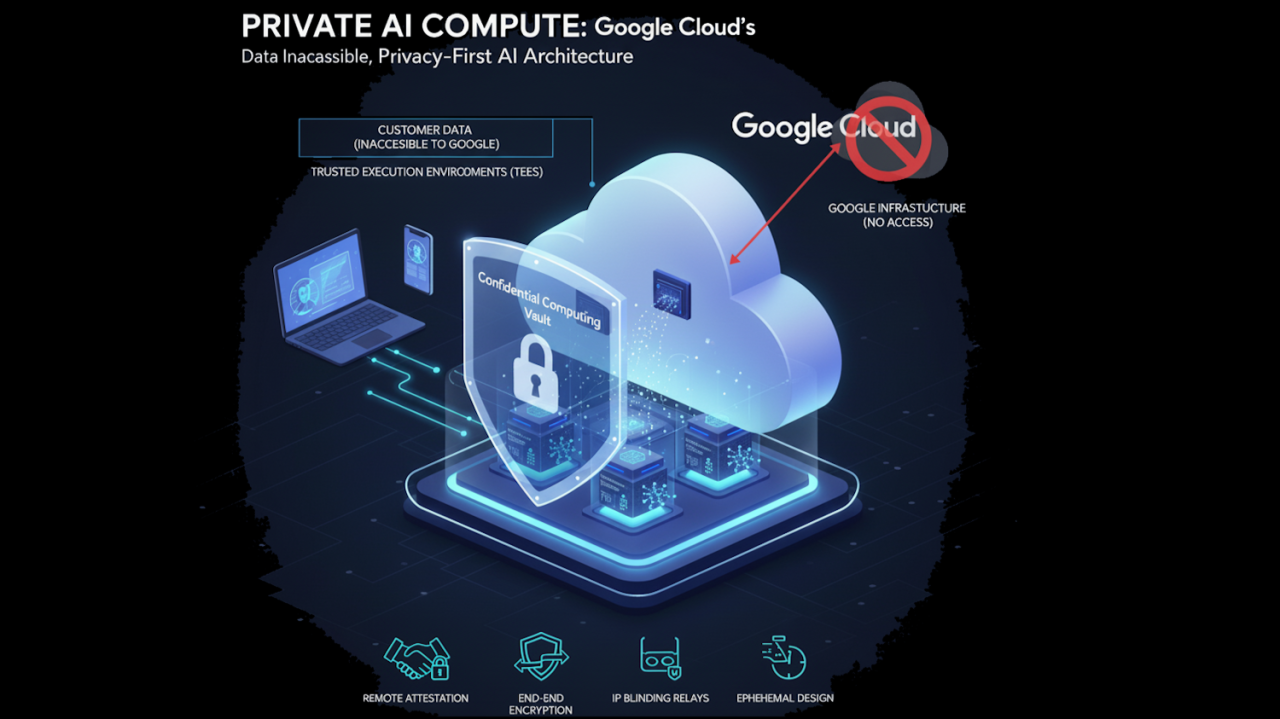
Cloud storage encryption protects files at rest. Network encryption protects data while it travels. Confidential computing adds a layer for data while software uses it in memory. This matters because a normal server must process clear data at some point. A trusted execution environment, or TEE, uses hardware isolation to reduce who or what can inspect that working data.
Real-world example
It is not a magic privacy shield. The application can still leak a secret, a user can still grant the wrong access, and a bad output can still expose data. Think of confidential computing as one part of a wider system that includes access control, secure code, audit logs, and good key handling.
Start with a real threat model
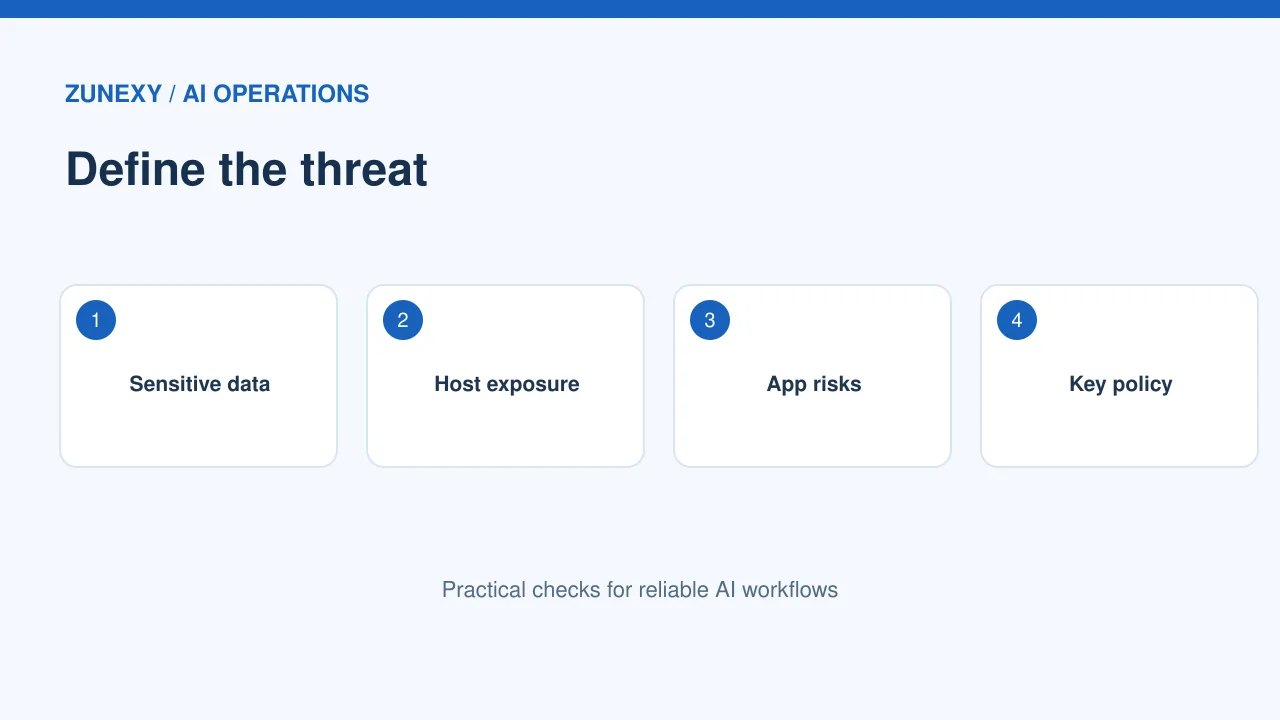
Before choosing a special VM, write down what you want to defend against. It could be a cloud operator with broad infrastructure access, a compromised host, or the risk of running a joint analysis across organizations that do not want to share raw records. A TEE may help with some threats and not others.
Pilot check
For example, two hospitals may want to study combined trends without giving each other every patient row. A secure processing design may be useful. But it still needs lawful data use, good input checks, output limits, and a plan for small groups that could reveal identities. Hardware isolation does not replace those duties.
Know the pieces of the design
A confidential VM runs a workload using supported processor features that encrypt or isolate memory. The exact protection depends on the chip, cloud service, operating system, and mode. Google Cloud Confidential VM documentation lists the supported technologies and how they differ.
Real-world example
The design may also use a key service, a secure boot process, and a remote verifier. The verifier checks evidence about the running environment before releasing a sensitive key or dataset. A diagram should show the application, host, TEE, attestation service, key provider, and the party that reviews the result.
Understand remote attestation
Remote attestation is a way to check claims about the environment before trusting it. It may report the processor protection mode, startup measurements, and parts of the system configuration. A verifier compares those claims with a policy. The policy should be written before an app asks for a secret.
Pilot check
The Google Cloud attestation overview explains the roles of the attester and verifier. In a practical test, make sure a known-good VM passes and a changed or unsupported configuration fails. If every VM passes, the test has not proved much.
Choose a workload that can benefit
Good first candidates handle data that is sensitive during processing and have a clear boundary. Examples include a private analytics job, a secure document transformation, or a limited AI model workload. A large app with many outside services can be harder to isolate.
Real-world example
Choose one workflow with a named owner and a modest data sample. It should have a simple input, a clear output, and a reason to keep memory protected. Do not start with your hardest production system. A safe pilot will teach you about keys, drivers, logs, and performance before you depend on the feature.
Check the hardware and software fit
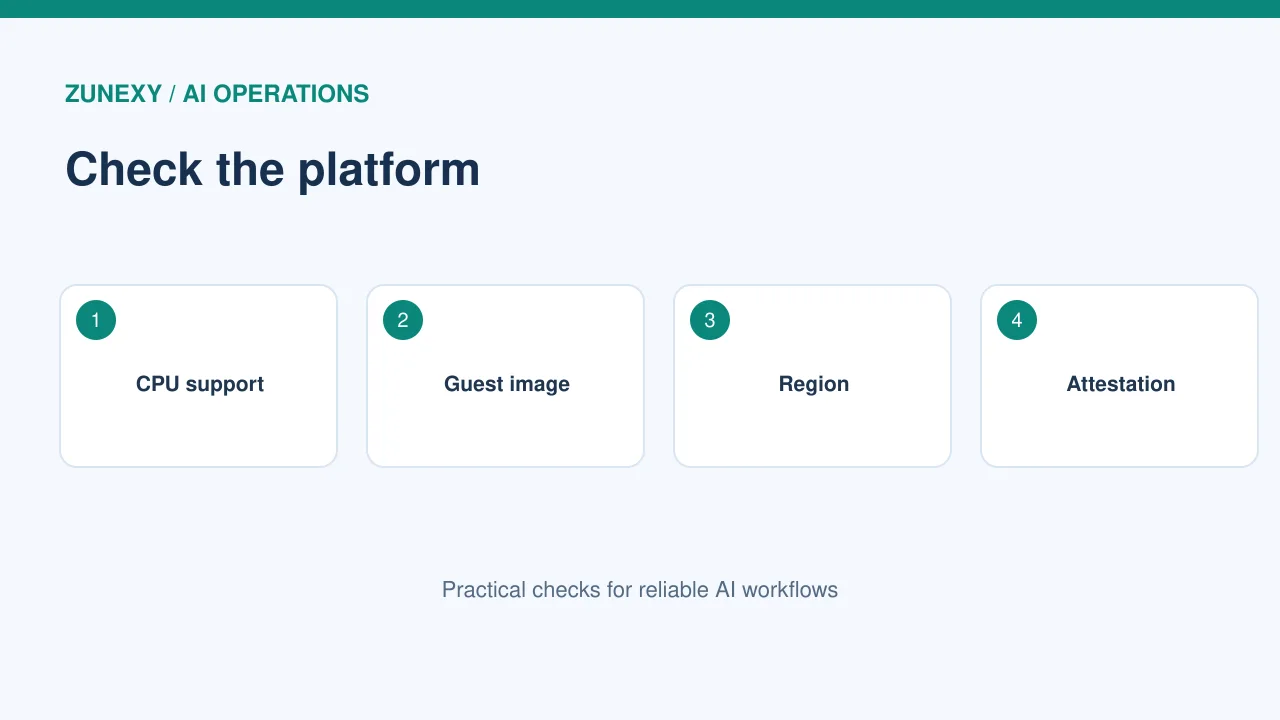
A vendor may support a confidential VM only on certain machine types, CPU generations, guest images, or regions. Some drivers and accelerators may need special setup. Support may change as new chips arrive. Read the current compatibility table, not a marketing overview.
Pilot check
For AI processing, check model runtime support, GPU or CPU needs, memory size, disk encryption, and network design. A workload that requires a feature not available in the TEE may need a different architecture. The answer might be to protect only one sensitive step rather than the whole pipeline.
Keep keys outside the workload
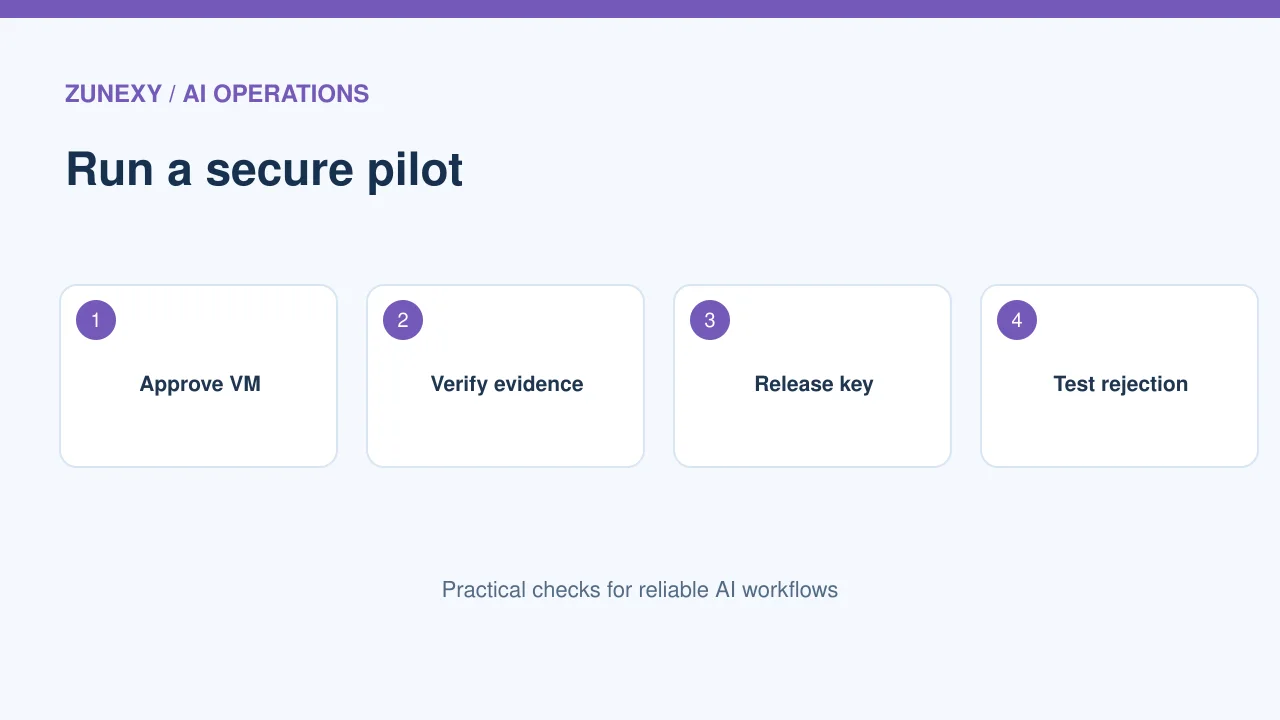
A useful design does not place its most sensitive decryption key in a startup script or image. It asks a trusted key service for the key only after an approved environment passes an attestation check. This limits when and where the key can be released.
Real-world example
Test a refusal case. Change a measured boot setting or use an unapproved image, then confirm that the key is not released. Record the policy version and who can change it. A secure key release rule is often more important than the screen that says confidential mode is enabled.
Measure performance with real data
Memory protection and attestation can change startup time, CPU cost, and workload behavior. The effect depends on the hardware and job. Do not use a single benchmark from a vendor to set your budget. Run the same work with and without the protection, then compare.
Pilot check
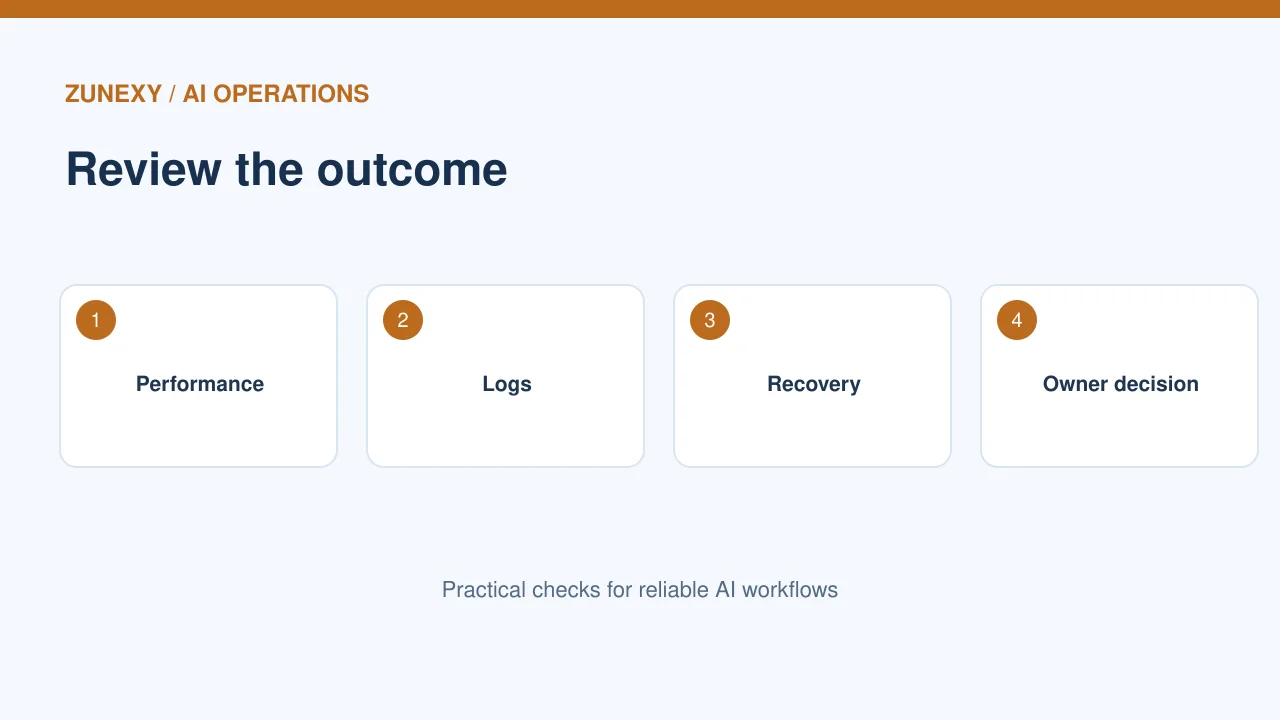
Measure task completion, memory use, latency, startup delay, network errors, and cloud cost. Use realistic file sizes and request patterns. If the protected job is a nightly batch, a small startup delay may be acceptable. If it serves a live user, that delay could matter much more.
Do not forget logs and output
Even if the main computation runs in a TEE, logs may leave it. Debug messages, traces, exception reports, and output files can expose sensitive data. Review what each service captures. Turn off unnecessary raw-data logging and add redaction where it helps.
Real-world example
A private analytics job may return a table with too few people in one group. The hardware may have kept input memory safe, yet the output still leaks information. Check the result before release. Where needed, apply minimum group sizes, aggregation, or other privacy controls appropriate to the use case.
Plan failure and recovery
A confidential VM can fail like any other machine. Backups, region choices, image updates, and restore steps still matter. The recovery environment should meet the same key release and attestation rules as the normal environment.
Pilot check
Test a restore to a fresh approved VM. Verify that a valid environment can receive its key and that a mismatched environment cannot. Keep the runbook clear enough for a second operator to follow. An untested recovery plan can turn a security feature into an outage risk.
A small-team decision guide
Start with the data you want to protect while in use. Write the threats, choose a small workload, check hardware support, and define the attestation policy. Then test key release, failures, performance, logs, and restore. Review the result with the business and security owners.
Real-world example
For reference, the Google Cloud architecture guidance for confidential analytics and AI describes how attestation can support a secure processing design. Adapt the ideas to your environment. A sensible pilot should end with a clear go, change, or stop decision.
Before you deploy
- Write a threat model and business reason.
- Check the supported region, machine type, and software.
- Use attestation before releasing sensitive keys.
- Test rejected environments and key denial.
- Measure cost, performance, logging, and recovery.
Conclusion
Confidential computing is a focused control, not a substitute for a safe app. The best first step is a small, measurable test that shows what the hardware protects and what the team must still manage.