AI Customer Feedback Clustering in 2026: Turn Reviews Into Useful Fixes
AI can group a large pile of feedback into themes. The hard part is keeping real customer meaning intact and turning the findings into a better service. This guide shows a small-team method for sorting comments, checking labels and acting on the result.
Start with the decision
What matters
A shop may get hundreds of short reviews each week. Reading them all takes time. An AI tool can group similar comments, but it cannot decide which problem matters most to the business. First, pick the question you need answered.
Use it this way
You might ask why new customers leave after one order. That calls for themes about delivery, product fit and support. A broad sentiment score alone will not explain the next action. Write the business question at the top of the work sheet.
Gather feedback with care
What matters
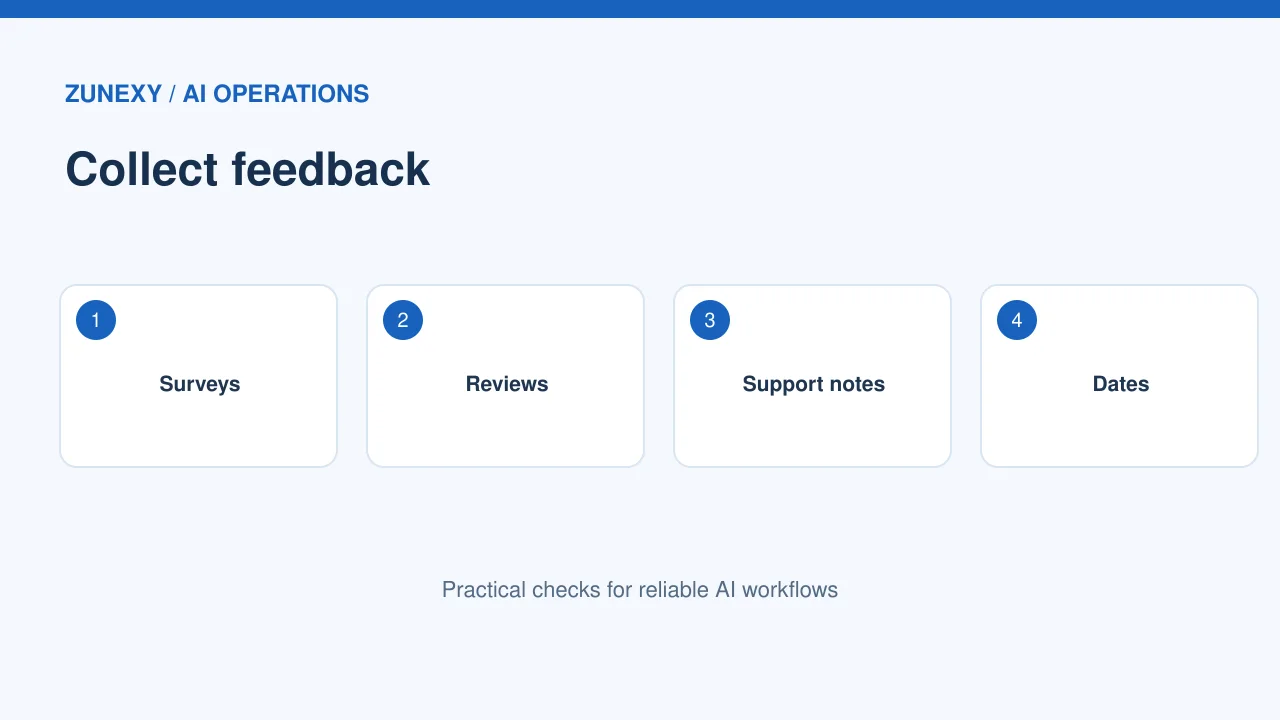
Reviews, surveys, chat messages and support notes can each give a different view. People who complain may be more likely to write than people who are happy. Treat the set as feedback from respondents, not as a perfect vote from all users.
Use it this way
Record the source and date. Remove records that the team has no right to use. Keep names, addresses and account numbers out of a test when possible. A small, clean sample is a better start than an unreviewed dump of private text.
Build a plain topic list
What matters
Begin with a few themes a human can explain. Examples might be setup trouble, delivery delay, price confusion, missing feature and positive support. Let the model suggest a new theme when comments do not fit.
Use it this way
Read 50 sample comments by hand. Write short definitions and examples for each theme. Two staff members can label a small overlap set. If they disagree often, the theme names may be unclear. Fix the labels before asking AI to apply them to thousands of records.
Keep mixed comments intact
What matters
A single message may praise the product and criticize shipping. Giving it one positive or negative label loses the useful detail. Allow more than one theme and a note about which part of the message each label describes.
Use it this way
For a note that says ‘easy to set up, but delivery was late,’ record setup praise and delivery issue. Do not turn it into a neutral score that hides both findings. A good theme report keeps the raw meaning close to the source.
Check the model against people
What matters
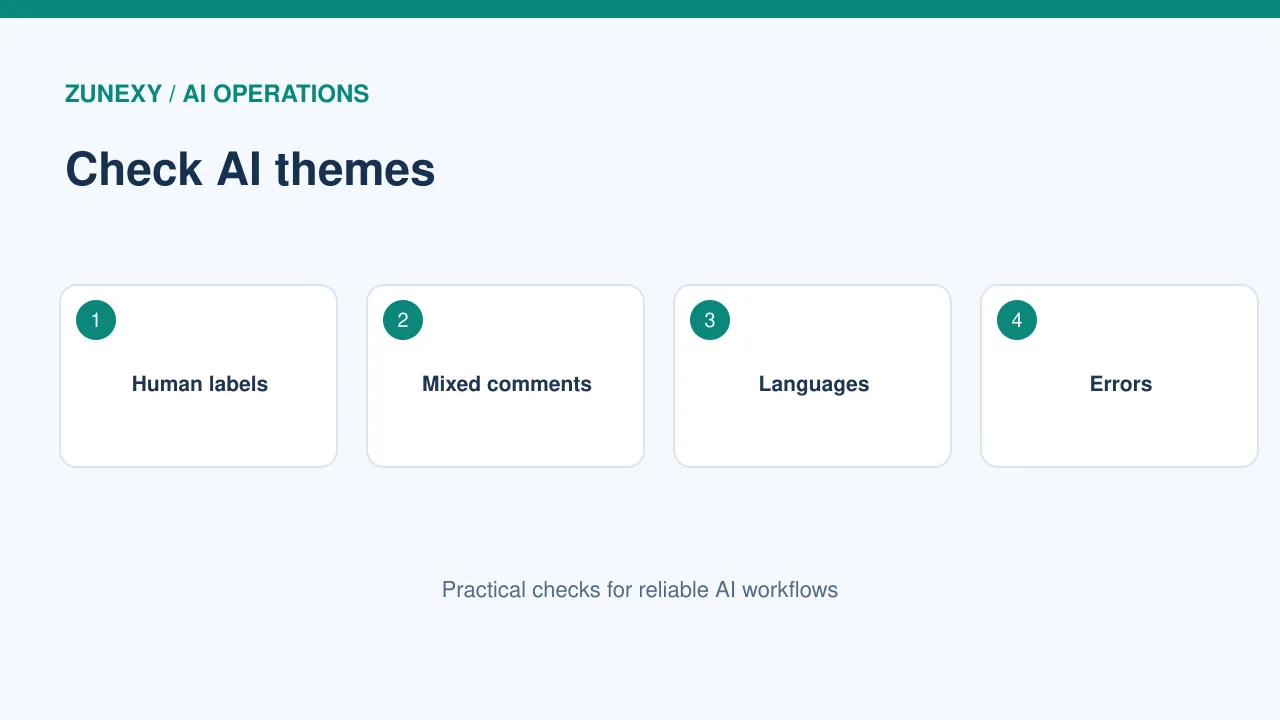
Take a sample that staff have labeled. Compare AI results with those human labels. Look at false matches and missed problems, not only overall agreement. Errors in a rare safety issue may matter more than errors in a common minor theme.
Use it this way
The [NIST AI RMF Measure playbook](https://airc.nist.gov/airmf-resources/playbook/measure/) discusses validation against context-specific ground truth. Use this idea in a light way: define what a right label means for your task and sample it on a schedule.
Handle language differences
What matters
Global brands may receive comments in several languages. A tool may translate a phrase too literally or miss local slang. It can also confuse a short joke with a complaint. Keep the original text available to approved reviewers.
Use it this way
Choose a small sample from each major language group. Ask a fluent reviewer to check the hard cases. Do not assume that one English test proves quality across all markets. Report gaps openly when a language has too little data.
Find changes over time
What matters
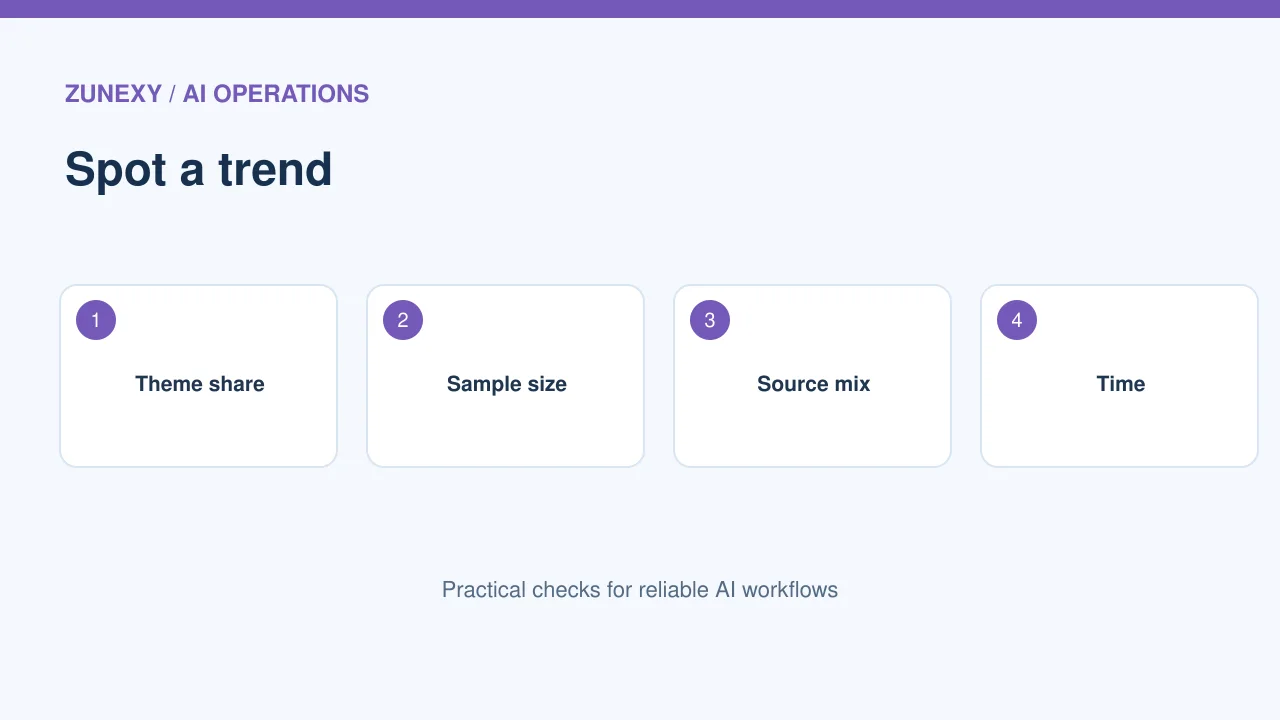
A theme count is more useful when tied to a period and number of responses. Ten delivery complaints out of twenty replies is unlike ten out of two thousand. Do not hide the denominator.
Use it this way
Compare the share of each theme over similar weeks. Note campaigns or product launches that changed who responded. A sudden spike may point to a real problem, but first check whether the survey question or collection channel changed.
Protect customer details
What matters
Even short reviews can contain personal facts. Redact details that the analysis does not need. Limit access to raw comments and set retention rules. Store a safe record ID for follow-up rather than copying a full private chat into each report.
Use it this way
The [UK ICO](https://ico.org.uk/for-organisations/uk-gdpr-guidance-and-resources/data-sharing/anonymisation/pseudonymisation) explains that pseudonymised data can still be linked back to people under some conditions. Treat it with care and follow the rules that apply to your users.
Turn themes into fixes
What matters
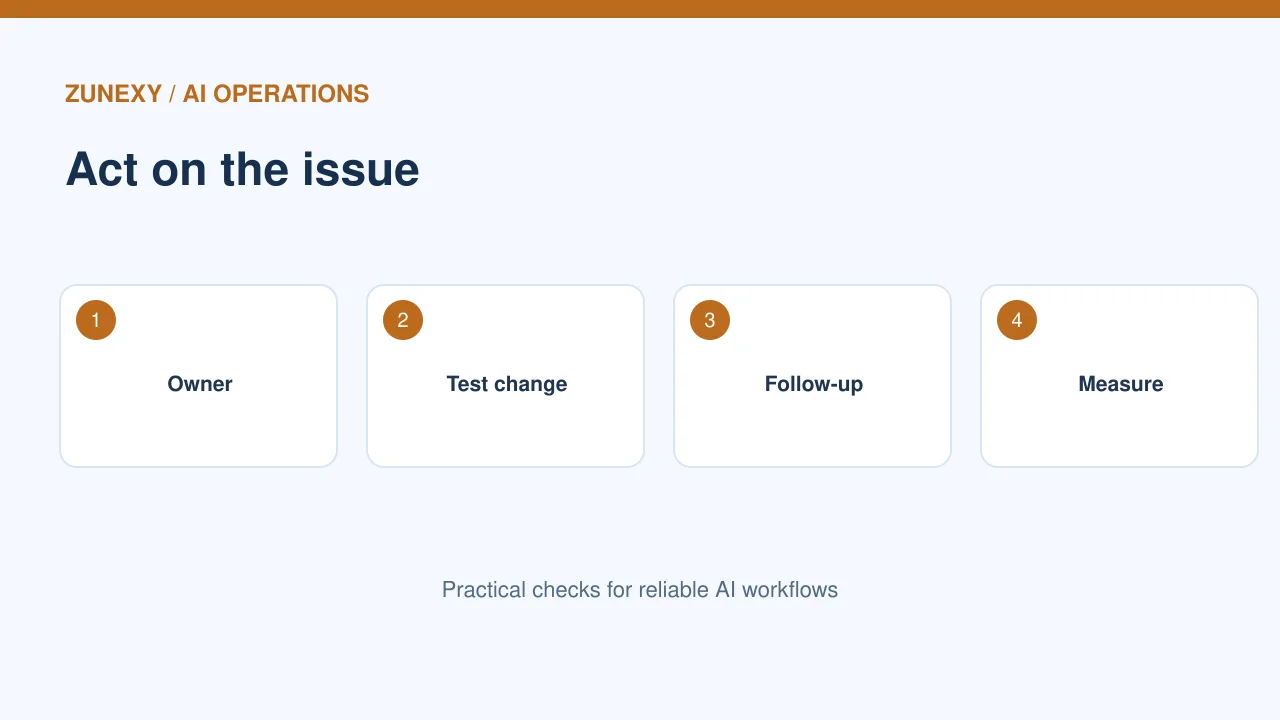
A dashboard can become a place where problems are counted but never solved. Give each major theme an owner, a likely cause and a next step. Do not ask the model to promise a fix it cannot deliver.
Use it this way
If new buyers struggle with setup, have the product team test the first-use flow. Share a few redacted examples. After a change, watch the same theme over several weeks. This closes the loop from feedback to a real user benefit.
Spot weak conclusions
What matters
Do not say ‘all users hate pricing’ when only a handful mentioned price. Avoid causal claims from one theme chart. A change in comments could come from season, channel mix or a new prompt.
Use it this way
Write a note on sample size, dates and major limits. If the evidence is thin, ask a focused follow-up question in a survey or interview. Use the AI result to guide research, not to replace it.
Keep a human review lane
What matters
New topics appear as products and customer needs change. The model should have a way to mark uncertain comments for staff. Track how often people correct labels and whether those corrections improve later work.
Use it this way
Each week, sample the largest themes and a few low-confidence records. Record shifts in label quality. Retire themes that no longer help decisions. A living topic list serves customers better than a fixed set of labels no one checks.
Test the report with the people who use it
Ask for a decision, not a rating
Give the report to a support lead and ask what they would change this week. If the chart is hard to read or the themes are vague, the tool has not helped. Show two or three safe example comments for each top theme. A short plain summary often works better than a large AI word cloud.
Watch for missing voices
Some users will never fill out a survey. Others may have trouble with the language or form. Compare feedback channels and ask which groups may be absent. Do not invent their views. Add a better way for them to share a problem, then review whether new feedback changes the picture.
Keep the raw review in context when it supports a decision.
A useful weekly review
- Check sample size and feedback source.
- Review a few AI labels by hand.
- Flag new or mixed themes.
- Protect private details.
- Assign an owner to the top issue.
- Measure whether the fix helps.
Good feedback analysis does not end at a chart. It helps a team hear the right problem, check it, and make one useful change.